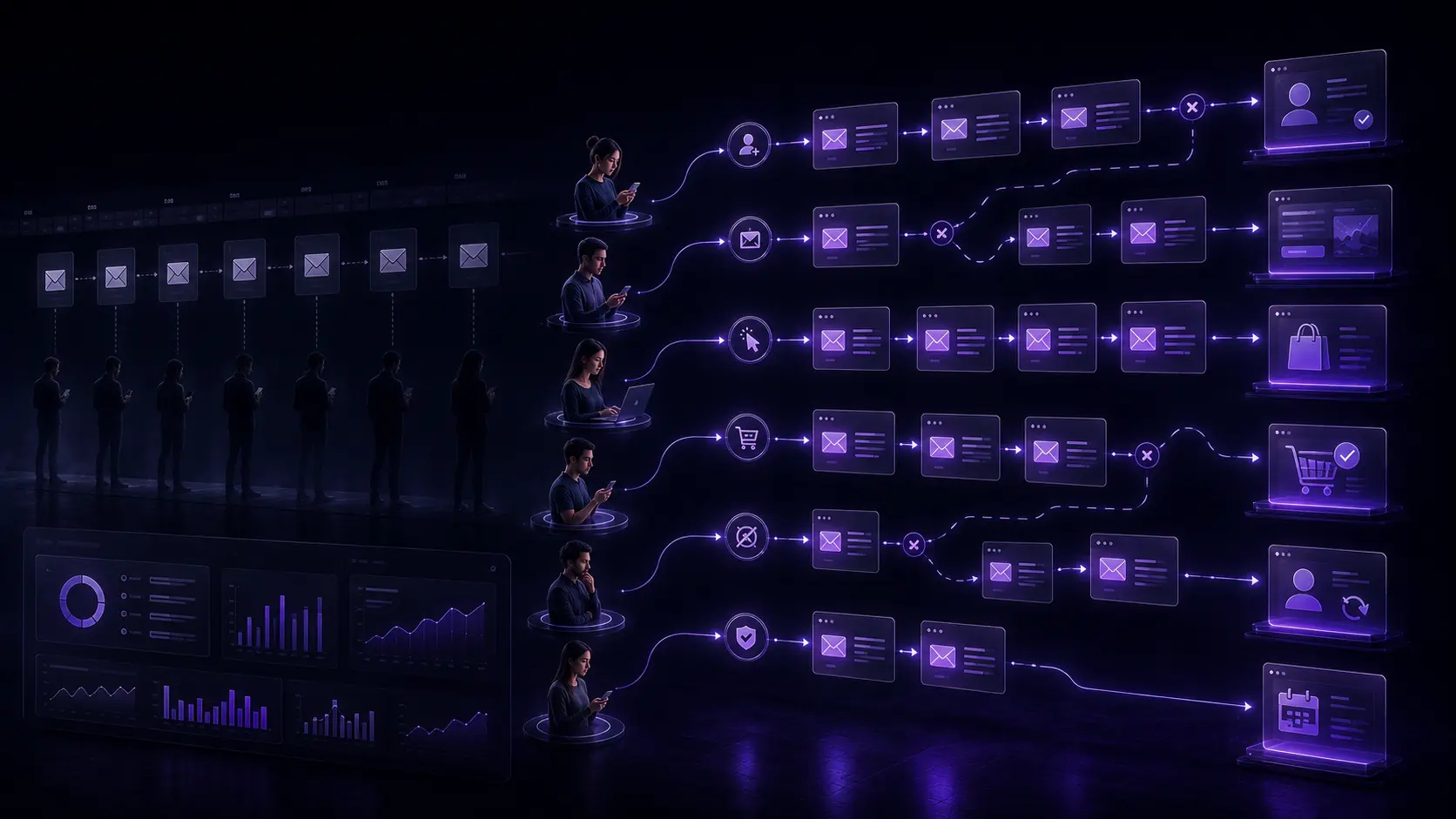
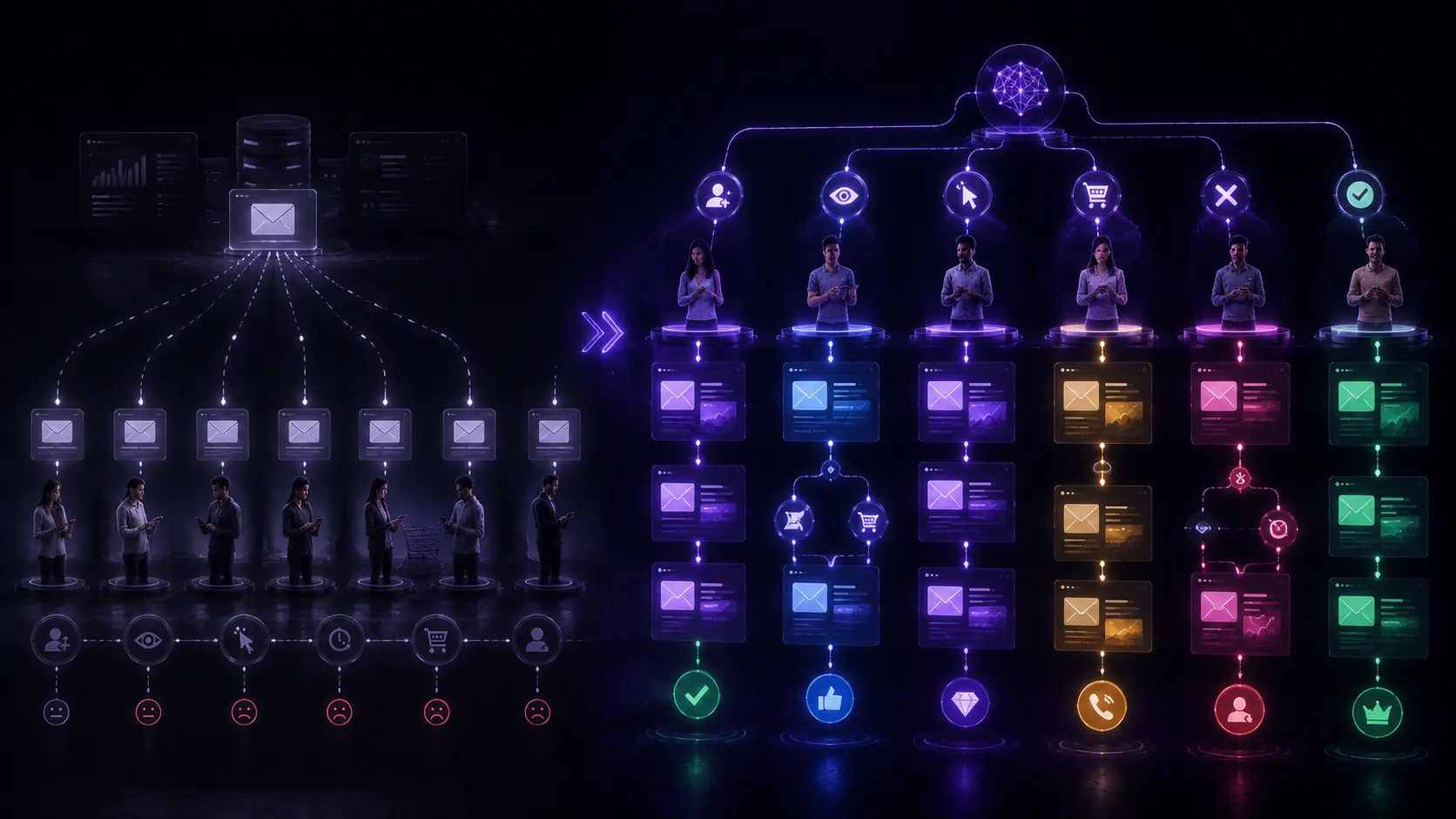
Well-built sequences share four structural pieces, and skipping any one of them is what turns a “sequence” back into a disguised broadcast.
The trigger — The specific action or event that starts the flow: a form fill, a page visit, a purchase, a period of inactivity. Vague triggers (“subscribed to the newsletter”) produce vague sequences. Specific triggers (“visited the pricing page twice in 48 hours”) produce specific, high-intent sequences. This is the same targeting logic behind a converting landing page: the more specific the intent signal, the more specific the message can be.
The narrative arc — Each email should move the recipient one step further than the last, not repeat the same pitch in different words. A typical lead-nurture arc runs: value-first education, then pain-point identification, then solution positioning with proof, then social proof, then a soft ask, then a direct ask. Four to six emails over three to four weeks covers this arc without rushing it. HubSpot’s guide to lead nurturing breaks this same arc down for longer sales cycles.
Branching logic — A flow that sends the same next email regardless of what the recipient did with the last one is still a broadcast wearing a sequence’s clothing. Real branching looks at behavior: opened but didn’t click gets a softer re-ask; clicked the CTA gets moved straight to the decision-stage email, skipping the education step they’ve already earned past.
Exit conditions — The flow needs a defined finish line. Someone who books a call, makes a purchase, or replies directly should leave the sequence immediately, not keep receiving emails written for someone who hasn’t converted yet.
Nothing kills trust faster than a “still interested?” email sent to someone who bought yesterday.