Nurture to Convert: Email Sequences That Drive Revenue in 2026

Most email lists get one thing from the businesses that own them: a blast. Same message, same day, same subject line, sent to a founder three days into evaluating a product and a customer who churned eight months ago. Well-built email sequences that drive revenue work differently.

The list doesn’t know the difference. Neither does the campaign. This is the broadcast model, and it treats every subscriber as though they’re standing at the same point in the same decision.

They aren’t.

Sequences built on triggers instead of a calendar send the right message at the moment someone’s behavior signals they’re ready for it. This is the same principle behind effective copywriting generally: message the person where they actually stand, not where a calendar assumes they stand.

The Structural Problem With Email Sequences That Drive Revenue

A broadcast campaign runs on a publishing schedule: newsletter every Tuesday, promo every Friday. The logic driving the send is “it’s time,” not “this person did something.”

That works for announcements. It fails as a conversion engine because it ignores where each recipient actually stands. Three people on the same list might be: researching a problem for the first time, comparing two vendors, or sitting on a cart they abandoned yesterday.

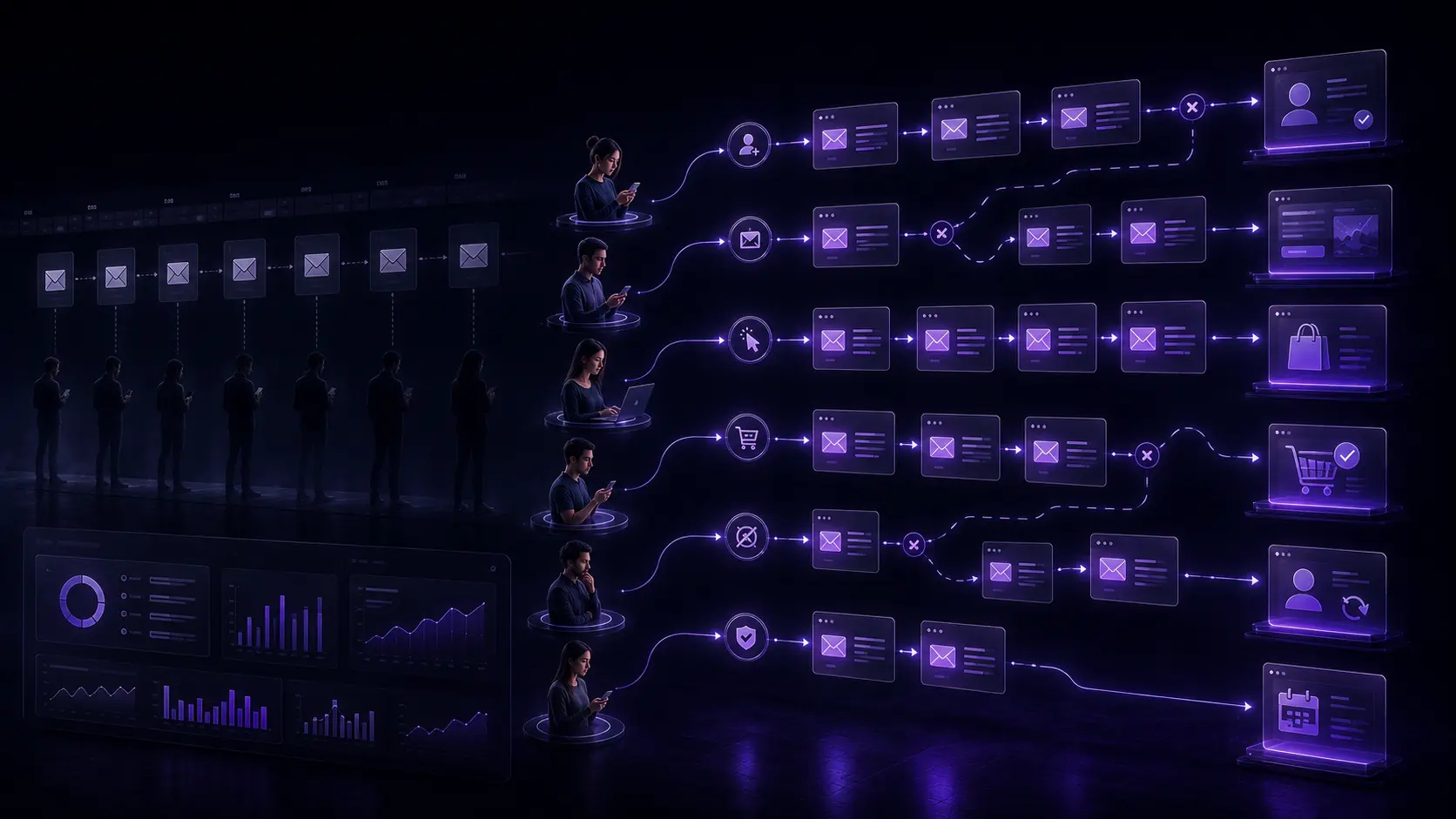
A broadcast sends the same message to all three. One gets an email too early to matter. One gets it too late to change anything. Only the third, by accident, gets something relevant. Trigger-based sequences fix this by replacing the calendar with an event. A sign-up starts an onboarding flow.

A pricing page visit starts a nurture sequence. An abandoned cart starts a recovery flow three hours later, not whenever the next newsletter happens to go out. According to Mailchimp’s benchmark data, triggered sends consistently outperform standard broadcast campaigns on open and click rates. Klaviyo’s research shows a similar gap in e-commerce flows specifically.

This is the core mechanic behind email sequences that drive revenue: the send date becomes a function of behavior instead of a fixed slot in a content calendar.

Trigger-based email sequences replacing broadcast campaigns with behavior-driven sends

The Architecture of Email Sequences That Drive Revenue

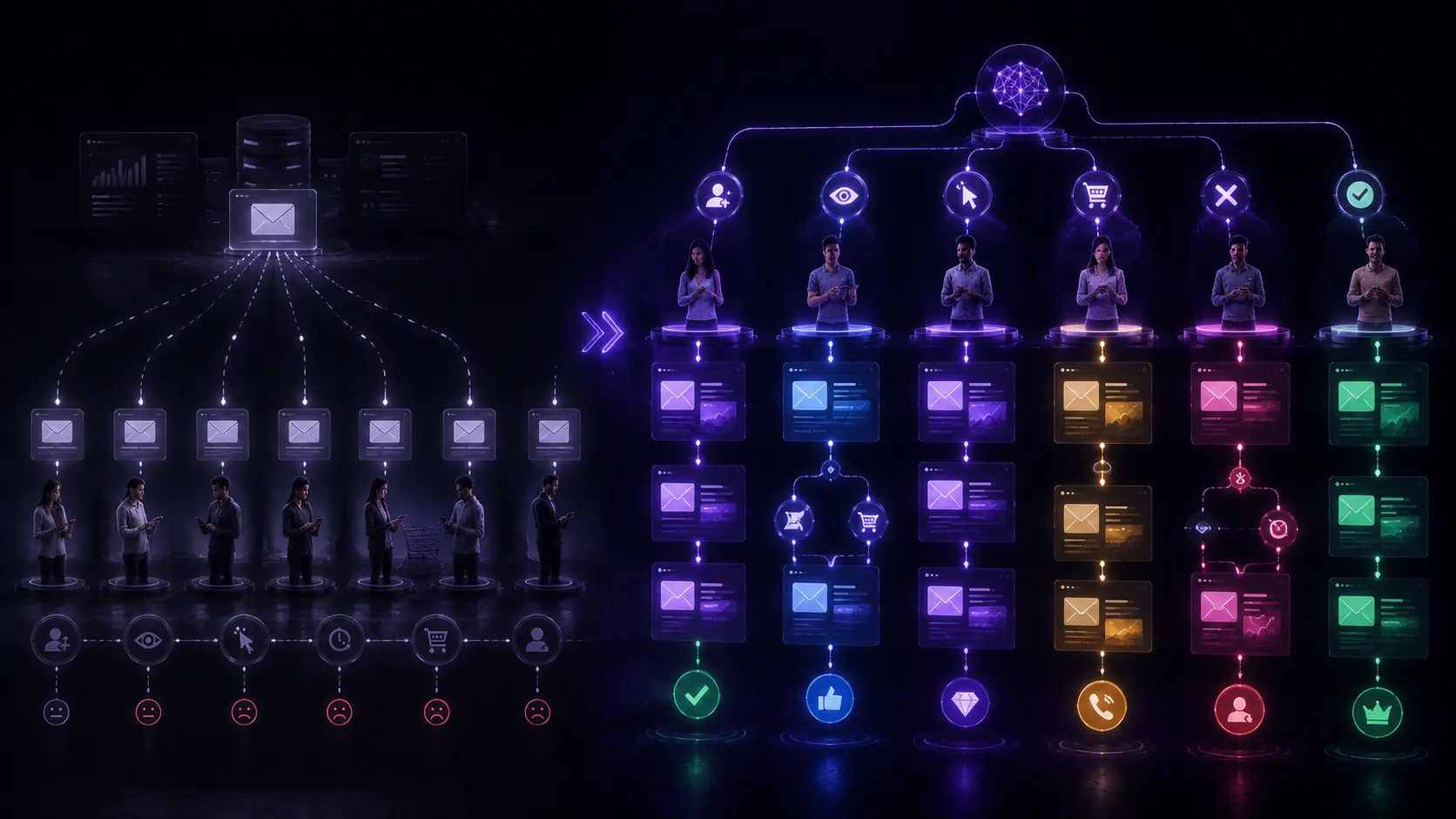
Well-built sequences share four structural pieces, and skipping any one of them is what turns a “sequence” back into a disguised broadcast.

The trigger — The specific action or event that starts the flow: a form fill, a page visit, a purchase, a period of inactivity. Vague triggers (“subscribed to the newsletter”) produce vague sequences. Specific triggers (“visited the pricing page twice in 48 hours”) produce specific, high-intent sequences. This is the same targeting logic behind a converting landing page: the more specific the intent signal, the more specific the message can be.

The narrative arc — Each email should move the recipient one step further than the last, not repeat the same pitch in different words. A typical lead-nurture arc runs: value-first education, then pain-point identification, then solution positioning with proof, then social proof, then a soft ask, then a direct ask. Four to six emails over three to four weeks covers this arc without rushing it. HubSpot’s guide to lead nurturing breaks this same arc down for longer sales cycles.

Branching logic — A flow that sends the same next email regardless of what the recipient did with the last one is still a broadcast wearing a sequence’s clothing. Real branching looks at behavior: opened but didn’t click gets a softer re-ask; clicked the CTA gets moved straight to the decision-stage email, skipping the education step they’ve already earned past.

Exit conditions — The flow needs a defined finish line. Someone who books a call, makes a purchase, or replies directly should leave the sequence immediately, not keep receiving emails written for someone who hasn’t converted yet.

Nothing kills trust faster than a “still interested?” email sent to someone who bought yesterday.
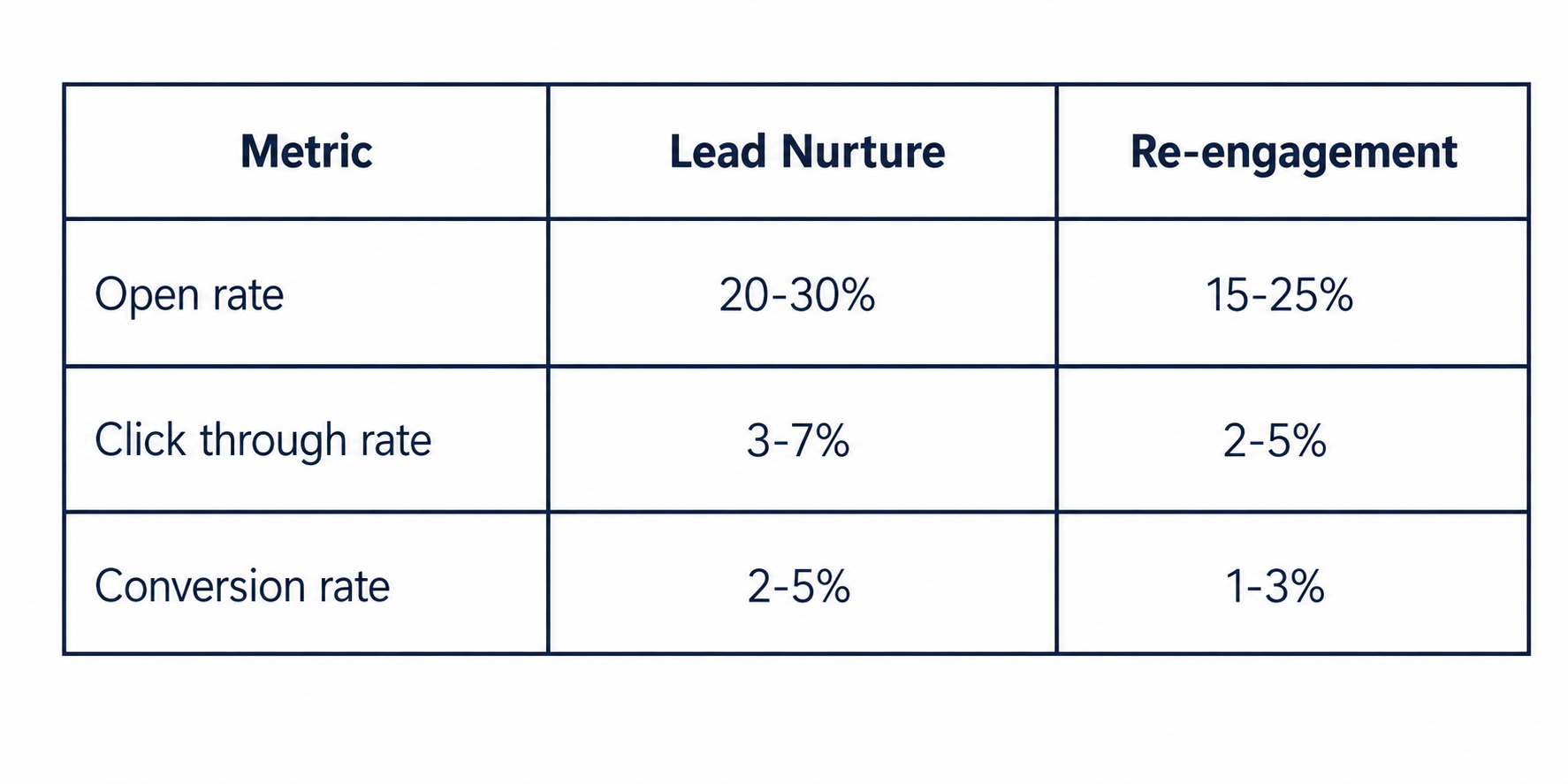
What Good Sequences Look Like, By the Numbers

Trigger-based sequences aren’t just a better experience for the recipient. They perform measurably better against a broadcast baseline.

A well-timed re-engagement flow can convert dormant subscribers at a higher rate than a cold nurture sequence converts new leads, because the trigger, someone going quiet, carries more signal than a generic newsletter send ever will. Campaign Monitor’s research shows behavior-triggered emails routinely post higher conversion rates than scheduled sends.

ActiveCampaign’s data points to the same pattern in B2B pipelines specifically

Performance comparison showing how trigger-based email sequences outperform broadcast campaigns

Building the Shift​

Moving from broadcast to trigger-based sequences doesn’t mean abandoning the newsletter. Announcements still have a place.

It means every conversion-focused email earns its trigger before it earns a send. Start with the highest-intent moments already happening in your business: a cart left mid-checkout, a demo request that went cold, a free-trial signup that hasn’t logged in. Getting this right often starts with a proper SEO and content audit, since the traffic feeding your list needs to be qualified before any sequence can convert it.

Build one flow around each, define the exit condition before writing a single subject line, and let the behavior decide the timing instead of the calendar. If your current setup runs entirely on manual sends, this is usually the first place a web development or automation audit pays off.

A list that gets the right email at the right moment converts. A list that gets every email at the same moment learns to ignore all of them.

Want email sequences that drive revenue mapped to your actual funnel? Get in touch and we’ll build the trigger logic around how your leads actually behave.

Scroll to Top